

In today's diverse classrooms, educators must be equipped with the skills to support multilingual learners, especially during the critical early literacy years.
Teaching Early Literacy from a Multilingual Perspective is designed to empower K-5 educators with the knowledge and tools to implement culturally responsive, multilingual literacy instruction. This course aligns with the Oregon Department of Education's Early Literacy Framework, ensuring your teaching strategies reflect current best practices for fostering literacy in diverse classrooms.
This course is your opportunity to dive deep into early literacy instruction that prioritizes the unique linguistic strengths of your multilingual students.
By adopting a multilingual perspective, you can help students build foundational literacy skills while honoring and leveraging their home languages. You will learn from experts in the field of multilingualism and early literacy, gaining practical insights that will shape your classroom strategies for years to come.
Master Multilingual Literacy Strategies. Understand how to teach early literacy in a way that builds on students' linguistic repertoires while addressing foundational literacy skills.
Culturally Responsive Teaching. Learn how to engage multilingual learners in literacy practices that are equitable, culturally relevant, and responsive to their unique needs.
Develop Practical Classroom Resources. Participate in hands-on activities that will help you create classroom materials and literacy lessons tailored to your students’ diverse backgrounds.
Collaboration with Experts and Peers. Engage with a community of experts in multilingualism and early literacy, as well as other educators, to share ideas, reflect on practices, and learn from each other.
Throughout the course, you will engage with a variety of topics that build your capacity to implement multilingual literacy instruction effectively:
Introduction to Multilingual Literacy Instruction. Learn the fundamentals of teaching literacy through a multilingual lens and understand how to create an inclusive, culturally responsive classroom.
Practical Classroom Strategies. Discover hands-on techniques for integrating literacy activities that honor and utilize students' home languages while fostering English language development.
Reflect on Your Practice. Reflect on your current early literacy teaching methods and explore how you can modify them to better support multilingual learners.
Develop Classroom Resources. Create practical, engaging materials that help students build literacy skills in both their home languages and English.
This class was invaluable for me and my teaching partner, especially since we work in a dual-school setting with a diverse student population. It’s helped us better support our multilingual learners. To future teachers taking this class: Multilingual classrooms may seem complex, but that’s part of their beauty.
Multilingualism isn’t a barrier—it’s a strength. Students bring cognitive, social, and cultural assets that enhance literacy. Embrace these! Don’t view home languages as something to fix; they’re tools for building literacy. Encourage students to draw connections between languages and use their home language to support learning.
~Amanda Kha, past student
The course is especially beneficial for k-5 educators working with multilingual students and is ideal for k-2 educators and those who wish to collaborate with colleagues in their district. School and district leaders are also encouraged to enroll alongside teachers, fostering a more cohesive approach to literacy instruction across the district.
This course is designed for a range of Oregon educators, including:
In today's diverse classrooms, educators must be equipped with the skills to support multilingual learners, especially during the critical early literacy years.
Teaching Early Literacy from a Multilingual Perspective is designed to empower K-5 educators with the knowledge and tools to implement culturally responsive, multilingual literacy instruction. This course aligns with the Oregon Department of Education's Early Literacy Framework, ensuring your teaching strategies reflect current best practices for fostering literacy in diverse classrooms.
This course is an Oregon Department of Education approved professional development option for Oregon districts receiving Early Literacy Success School District Grant funding. Districts may now use these funds to pay for teachers’ enrollment in this course.
The field of early literacy is evolving, and teachers need to stay ahead of these changes to ensure the best outcomes for their students.
As conversations about equity and literacy grow, this course offers an opportunity to expand your professional skill set, enhance your classroom practice, and contribute to a more inclusive educational environment.
Enroll in Teaching Early Literacy from a Multilingual Perspective and become part of a community of educators dedicated to improving literacy outcomes for all students. Gain the expertise, confidence, and practical tools needed to foster a more inclusive and effective learning environment.
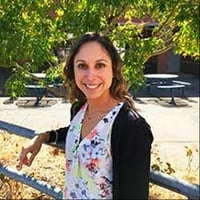
Elisa Lee
Hello everyone, and ¡bienvenidos!! My name is Elisa Lee, and I’m one of the instructors that is partnering with the College of Education at Oregon State University. This is my 21st year in bilingual education. After graduating from Concordia University with a Masters of Education in Early Childhood, I started my teaching career in Woodburn SD as a 5th grade bilingual teacher. After teaching 5 years in Woodburn SD, I was able to transition to be a 5th grade DL teacher in Beaverton SD. During my time in Beaverton SD, I was able to work with Karen Beeman and Cheryl Urow around Bridging between two languages. In 2013 I had the opportunity to start my journey in West Linn-Wilsonville SD as the first, 1st grade DL teacher. This gave me the perspective on how districts launch a new dual language program. During that time I was able to continue my education by taking the Dual Language Specialization classes through OSU and continuing working with other bilingual educators throughout the state around improving best practices for our emergent bilinguals.
In 2013, I joined West Linn–Wilsonville SD as the district’s first 1st grade dual language teacher, which gave me a unique perspective on how districts launch new DL programs. During my time there, I also completed the Dual Language Specialization program through OSU and collaborated with bilingual educators statewide to improve best practices for our emergent bilinguals. Eventually, I served as the Dual Language Coordinator for West Linn-Wilsonville SD supporting K–12 DL teachers, developing strategies for language transfer between English and Spanish, and examining foundational literacy in both languages.
Currently, I am serving as the Dual Language Coordinator for Beaverton School District, where I continue to focus on supporting multilingual learners across grade levels. My current interests include using multilingual assessment as a holistic tool to better understand our students, building culturally and linguistically responsive systems of support, and supporting teachers in their understanding of (bi)literacy development in both dual language and monolingual classrooms. I am also working toward my principal license through Lewis & Clark University.
Some of my current topics of interest are using multilingual assessment as a holistic analysis to help us better understand our multilingual students. Another area of interest is creating systems of support that are both linguistically and culturally appropriate for our multilingual students. I also want to continue to support teachers in understanding the (bi)literacy development of multilingual students in dual language programs as well as monolingual classrooms.
During my free time I enjoy going on long runs, spending time with my family, being a cheer mom, and traveling. I am looking forward to getting to know all of you and learning from all your practices. Please feel free to contact me at: elisa_lee@beaverton.k12.or.us if you have any questions, comments or ideas. Availability: I am available via email, or by appointment.
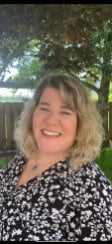 Michelle Murphy
Hello all, my name is Michelle Murphy, an adjunct instructor with the College of Education at Oregon State University. I am currently in my 20th year in education. After graduating from UW-Stevens Point with a BS in History and Social Sciences, I taught middle and secondary social studies in Wisconsin for two years before pausing my career to raise my two daughters. I then pursued graduate studies in literacy at UW-Stout, earning my Reading Endorsement and master's degree, and began my career as a reading specialist. I later became Reading Recovery trained through additional graduate coursework at Viterbo University.
Originally from Oregon, I relocated to the Portland metropolitan area, serving as a reading specialist and literacy coach in the Woodburn School District for two years. I then spent 10 years with the West Linn-Wilsonville School District as a reading specialist and district literacy coach, including supporting our Spanish dual-language schools. Along the way, I earned my principal license and professional administrator license through George Fox University, along with the IMSE Orton Gillingham Plus Training and other structured literacy credentials.
Over this past year, I've expanded my work beyond the K-12 classroom, serving as an instructor for the College of Education, where I teach courses in literacy strategies and core education. I also serve on the Oregon Department of Education's Literacy Advisory Roundtable and, with my research team, helped develop the Observing Reading Behaviors protocol, which we continue to refine through teacher feedback and conference presentations.
In 2024, two colleagues and I developed this course for Oregon State University under the ALK-8 grant; it has since continued through PACE. I've served as an instructor for five terms and as course coordinator, working with districts across the West Coast to register in-service teachers. To date, over 470 teachers and teacher leaders have completed the course, representing 24 districts, 2 universities, 2 ESDs, and 1 confederated tribe.
In our work with early literacy, we are deeply committed to building leader and teacher capacity to increase student achievement, especially with our marginalized students, ensuring their learning is explicit and systematic, rooted in meaning, and built on their language assets.
During my free time, I treasure spending time with my family, being outdoors walking, camping, and reading. I look forward to getting to know you all during our course.


.png?width=45&height=45&name=price%20(2).png)