✓ No prerequisites
✓ 100% online for maximum flexibility
✓ Created by industry experts and designed to give you needed skills
Food safety is changing fast.
New regulations, higher customer expectations, and better testing tools are raising the bar across the industry.
If you want a clearer path into food safety and quality roles, or you want to feel confident doing your job well, this program helps you build the foundation quickly and practically.
When you finish, you’ll have a solid, job-ready understanding of how food safety works inside real food operations, which means you'll be able to speak the language, understand the “why” behind requirements, and contribute with confidence.
You can expect to walk away able to:
Speak the language of food safety systems, like how they work, why they exist, and how regulations and standards show up in real operations.
Protect products and people with stronger traceability, storage/handling, nonconforming product control, recall readiness, and food safety culture.

Food safety is becoming a bigger priorityand a bigger career advantage.
Changing regulations, rising consumer awareness, and rapid tech advancements are driving sustained growth across the industry.
The global food safety market (including testing and related products) is projected to expand significantly through the 2030s, with multi-billion-dollar growth expected.
Program Highlights:
By completing the program, you’ll be able to:
1. Describe the structure and purpose of food safety management systems in food manufacturing and processing.
2. Identify relevant regulations and standards and explain how they support compliance.
3. Recognize biological, chemical, and physical hazards—and how they’re controlled.
4. Explain preventative controls and risk-based food safety management (hazard analysis + control measures).
5. Describe verification, validation, and continuous improvement activities.
6. Identify facility maintenance, sanitation, and environmental practices that prevent contamination.
7. Explain product control practices: traceability, storage/handling, nonconforming product control, and recall preparedness.
8. Describe the elements of a strong food safety culture and how employees and leadership support it.
9. Identify common systems (including HACCP- and GFSI-aligned systems) and their key components.
10. Explain how effective food safety protects public health and supports business continuity.
This program is a strong fit if you are:
Studying or newly graduated in food science, nutrition, biology, chemistry, agriculture, or a related field—and want practical, industry-ready knowledge

Changing careers into food manufacturing, labs, regulatory work, or operations—and need a structured, confidence-building start
New to the food industry (manufacturing, processing, packaging, distribution, warehousing) and want to learn the systems behind food safety
Working in QA/QC, sanitation, maintenance, or production and want to understand how your role supports compliance and prevention

Leading a team and want stronger understanding of food safety culture, verification, and continuous improvement
Preparing for advanced training or certifications (HACCP, PCQI, SQF Practitioner, and more) and want a solid foundation first


Get a broad, practical understanding of food safety systems across multiple sectors.
You’ll learn the core principles, and how they show up in specialized areas like dairy, juice processing, and food service.
You’ll also explore international expectations (with a focus on Europe), and how companies bring multiple programs together into a cohesive, risk-based system.
Courses Include:
Food Safety for Dairy | International Food Safety (Europe)
Juice HACCP | Systems and Specifications
Food Safety Management Change Management
Integrated Food Safety Systems | Food Service HACCP

(Coming soon)
Learn how companies confirm controls are working—and how they continuously improve.
You’ll learn how records, documents, and data support verification, how incidents are managed, and how internal audits strengthen compliance.
You’ll also cover receiving/storage/shipping controls, finished product testing and COAs, retention samples, traceability, and recall readiness—plus the culture needed to sustain it.
Courses include
MODULE 1 - Food Safety for Dairy
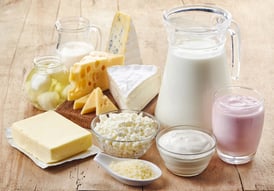
In this module, you will explore the most common food safety hazards associated with dairy products and where they typically occur across the supply chain.
MODULE 2: International Food Safety
In this module, you will get a practical introduction to the legislative framework that shapes food and drink operations in Europe.
MODULE 3: Juice HACCP Training
In this module, you will dive into FDA Juice HACCP regulation, which will help tighten your hazard approach, and better defend your controls during audits and inspections.
MODULE 4: Food Processing Systems & Specifications
In this module, you will learn how food systems work, what their key components are, and how drivers and feedback mechanisms influence outcomes.
MODULE 5: Food Safety Management Training
In this module, you will explore the objectives and foundations of food safety management and what operational excellence looks like when food safety is treated as a business-critical system.
MODULE 6: Change Management in Food Safety & Quality
In this module, you will learn key concepts and steps for implementing change, along with how to find and use credible, evidence-based sources to support your initiatives.
MODULE 7: Integrated Food Safety Systems
In this module, you will examine the evolution of food safety reforms and the roles that government agencies and stakeholders play in building stronger systems.
MODULE 8: Food Service HACCP Training
In this module, you will learn the types and categories of food service facilities and how food flows through these environments, from receiving to service.